
A Neighborhood with a Familiar Bloomington Feel
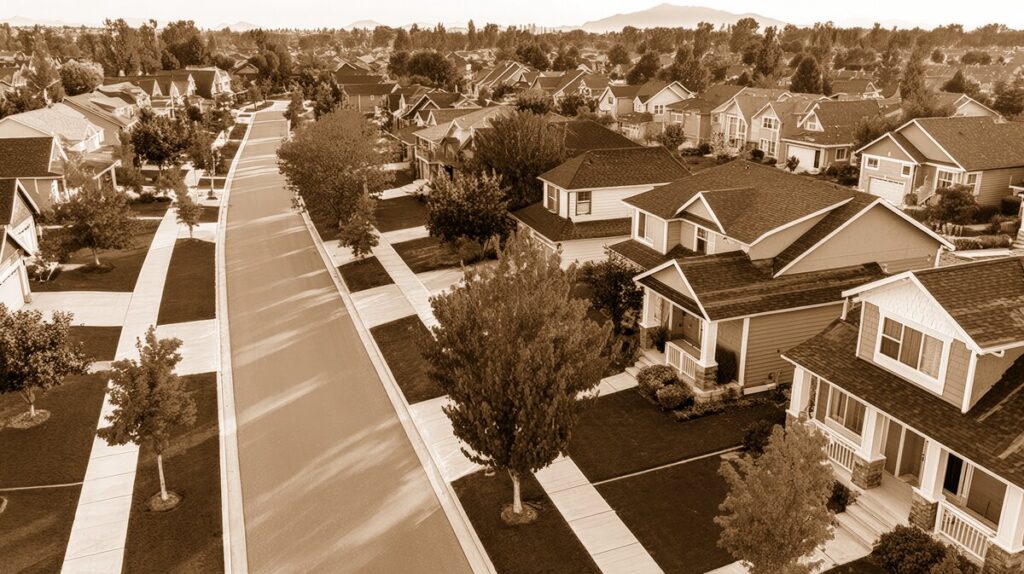
On Bloomington’s southeast side, Bryn Mawr is the kind of neighborhood that can be easy to overlook if you are moving quickly along the city’s larger roads. Its streets curve quietly through established homes, mature trees, and pockets of open space, creating a setting that feels removed from traffic while remaining close to Indiana University, shopping, schools, and the city’s everyday conveniences.
The neighborhood is centered around East Bryn Mawr Drive, with nearby streets such as Sare Road, Cedarwood Drive, Pinewood Lane, Dunstan Drive, Ashwood Lane, and Bluebird Lane helping define the surrounding residential area. Today, Bryn Mawr is often appreciated for its calm atmosphere and wooded character, but its story also reflects a larger Bloomington tradition: the gradual transformation of farmland and wooded acreage into attractive residential neighborhoods as the city expanded eastward and southward.
Where the Name Comes From
The name *Bryn Mawr* comes from Welsh. It is commonly translated as “big hill” or “great hill,” a fitting name for a neighborhood whose roads rise and fall with Bloomington’s rolling terrain.
Bryn Mawr is also the name of the historic Pennsylvania community and Bryn Mawr College, the renowned women’s college founded in 1885. Bloomington has long drawn inspiration from educational and cultural traditions, particularly those connected to Indiana University. The local neighborhood’s name appears to belong to that broader American habit of borrowing elegant place names from the East Coast and from Britain and Wales.
Unlike some older Bloomington neighborhoods, Bryn Mawr was not named for an early settler, a farm family, or a historic local industry. Its name gives the community an established, almost pastoral identity—one that suits the neighborhood’s broad lawns, mature trees, and gently winding streets.
From Country Roads to Residential Streets
For much of Bloomington’s early history, the land southeast of the original town center was rural. The city was founded in 1818, and its first commercial and civic life developed around the downtown courthouse square. In the nineteenth century, Bloomington’s growth was shaped by limestone quarries, railroads, local industry, and Indiana University.
Residential development initially clustered close to downtown and the university. Streets farther east and south remained a mixture of farms, woodland, country lanes, and large tracts of undeveloped land. That pattern began to change during the twentieth century, especially after World War II, when Bloomington experienced rising demand for single-family homes.
The postwar era brought new roads, automobiles, expanded utilities, and a growing preference for neighborhoods with more space between houses. Across Bloomington, subdivisions began appearing beyond the older grid of downtown streets. Bryn Mawr emerged from this period of suburban growth, when former rural land was reshaped into residential blocks designed for modern family life.
The neighborhood’s layout reflects that era. Rather than following a strict downtown-style grid, many of its streets curve around the terrain. Cul-de-sacs, landscaped verges, attached garages, and generously sized lots create a distinctly suburban pattern. At the same time, the neighborhood’s wooded edges and proximity to small parks help it retain some of the natural character that existed before construction began.
The Mid-Century Bloomington Connection
Bryn Mawr’s development fits into an important chapter of Bloomington history. From the 1950s through the 1970s, the city expanded rapidly as Indiana University grew, local industries changed, and more residents purchased automobiles. New neighborhoods were built on the city’s north, east, and south sides, often close to major roads but separated from commercial corridors by residential streets.
This period also saw the expansion of educational and cultural institutions that made Bloomington increasingly attractive to faculty members, professionals, university employees, and families. The east side, in particular, became associated with newer housing and convenient access to the university and growing commercial areas.
Bryn Mawr benefited from that evolution. It offered residents a quieter setting without requiring them to live far from Bloomington’s central institutions. A drive toward campus, downtown, or the Monroe County Public Library could be made without crossing the entire city, while nearby roads connected residents to newer shopping and service areas.
Nearby Landmarks and Green Spaces
Bryn Mawr does not have the grand Victorian homes or monumental public buildings found in Bloomington’s older historic districts. Its landmarks are more modest and more personal: the streets themselves, the shape of the lots, the mature trees, and the homes that have been maintained and adapted over several decades.
One of the neighborhood’s most recognizable features is East Bryn Mawr Drive, which gives the community its identity and provides a central route through the subdivision. The surrounding streets—among them Cedarwood Drive, Pinewood Lane, Ashwood Drive, and Dunstan Drive—show the careful planning typical of postwar residential development.
Nearby green spaces also contribute to the neighborhood’s character. Sherwood Oaks Park and other small parks and trails in the southeast Bloomington area offer places for walking, informal recreation, and neighborhood connection. The broader landscape around Jackson Creek and the city’s southern and eastern trails reminds residents that Bloomington remains closely tied to its wooded hills and limestone country.
Bryn Mawr is also within easy reach of larger Bloomington landmarks. Indiana University’s campus, Dunn’s Woods, the IU Arboretum, and the cultural institutions around Seventh Street and Eagleson Avenue are only a short drive away. These destinations connect the neighborhood to the academic and artistic life that has shaped Bloomington for more than a century.
How Bryn Mawr Has Evolved
Over the decades, Bryn Mawr has changed in familiar ways. Houses have been renovated, additions have been built, and landscaping has matured. Some original residents have passed homes to a new generation, while others have moved away and returned to Bloomington later in life. The neighborhood has also become home to university staff, retirees, young families, and longtime Bloomington residents.
That mixture gives Bryn Mawr much of its appeal. It is neither a frozen historic district nor a completely new development. Instead, it is a living neighborhood whose history is visible in layers: the original subdivision plan, the mid-century homes, the later renovations, and the changing ways residents use their yards, streets, and nearby parks.
Like much of Bloomington, Bryn Mawr has also felt the pressures of growth. Traffic has increased on major connecting roads, property values have changed, and newer construction has appeared around the edges of the southeast side. Yet the neighborhood’s basic qualities remain recognizable: quiet streets, mature vegetation, convenient access, and a strong sense of residential comfort.
What Makes Bryn Mawr Special
Bryn Mawr’s heritage is not built around one famous house or a single dramatic event. Its importance lies in the everyday history of Bloomington’s growth—the story of wooded and rural land becoming a home for people connected to the university, local businesses, schools, and civic life.
For longtime residents, the neighborhood’s appeal is often found in small details:
- The changing colors along tree-lined streets in autumn.
- Evening walks on East Bryn Mawr Drive and the surrounding lanes.
- Familiar neighbors tending gardens or greeting one another from front porches.
- Easy trips to Indiana University, downtown Bloomington, and nearby parks.
- The sense of privacy that comes from winding streets and mature landscaping.
Bryn Mawr represents a quieter side of Bloomington: not the courthouse square, not the limestone quarries, and not the bustle of Kirkwood Avenue, but the comfortable residential landscape that developed as the city grew. Its name may recall distant Welsh hills and an East Coast college town, but its character is unmistakably local—shaped by Bloomington’s rolling ground, university influence, changing families, and enduring affection for a neighborhood that feels like home.